
Sleep does not switch on like a light. It begins when the body feels safe enough to relax. Many people searching what is the science behind Dodow want real answers, not marketing promises. They want to understand how breathing, stress, and the nervous system work together at night.
So what is the science behind Dodow in simple terms? It uses slow, guided breathing to calm the nervous system and reduce mental overactivity. Helping the body shift into relaxation mode, it creates better conditions for natural sleep. Keep reading to explore the full explanation in detail.
What Is the Science Behind Dodow?
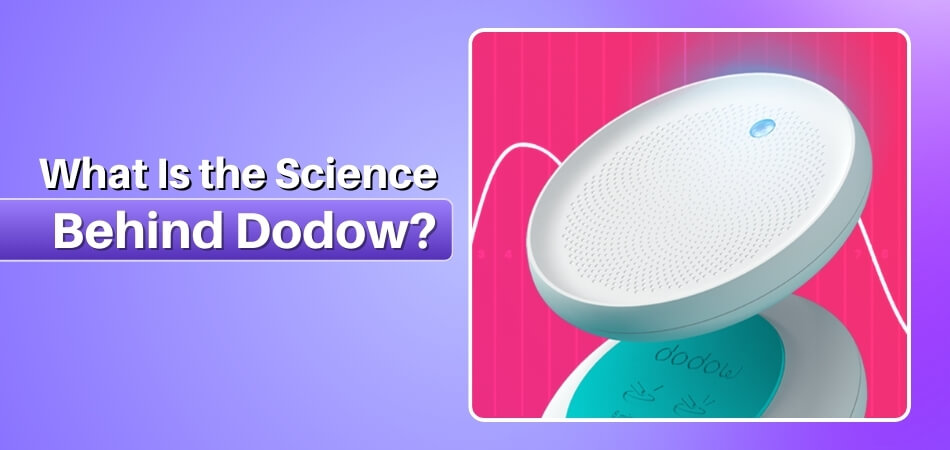
The science behind Dodow is based on paced breathing, nervous system regulation, and cognitive attention control. The device projects a rhythmic light that guides breathing to about six breaths per minute, a rate strongly associated with parasympathetic activation and reduced physiological arousal before sleep.
To understand how it works, we can break it into core scientific components.
Autonomic Nervous System Regulation
Sleep requires a shift from:
Sympathetic system (alert mode):
- Raises heart rate
- Increases cortisol
- Keeps the brain active
To:
Parasympathetic system (rest mode):
- Slows heart rate
- Reduces blood pressure
- Signals safety and recovery
Many people with sleep-onset difficulty remain stuck in sympathetic dominance at night. Slow breathing stimulates the vagus nerve, increasing parasympathetic activity and helping the body transition toward rest.
Six Breaths Per Minute Matters
Breathing at approximately 5–7 breaths per minute has been shown to:
- Improve heart rate variability (HRV)
- Enhance vagal tone
- Reduce stress signaling
- Stabilize cardiovascular rhythm
Higher HRV reflects better autonomic balance. By guiding breathing to this rhythm, Dodow leverages a well-documented physiological relaxation response.
Hyperarousal and Insomnia
Modern sleep research supports the hyperarousal theory of insomnia, which suggests sleep difficulty is often caused by excessive mental and physiological activation.
Common signs include:
- Racing thoughts
- Elevated heart rate
- Increased cortisol
- Persistent mental rumination
The method aims to counter this state by reducing both physiological and cognitive arousal simultaneously.
Attention Redirection and Brain Activity
Beyond breathing, the device uses visual pacing to anchor attention. This can:
- Reduce rumination
- Decrease overthinking
- Lower stress-related brain activity
The pulsing light acts similarly to a meditation focus point, shifting the brain away from internal chatter and toward rhythmic breathing.
What the Science Supports and What It Doesn’t
Supported by research:
- Slow breathing improves autonomic balance
- Vagal stimulation promotes relaxation
- Attention anchoring reduces cognitive arousal
Less established:
- Large independent clinical trials evaluating Dodow specifically
The breathing science is credible. Direct device-specific validation is more limited.
Scientific Summary
At its core, the approach relies on three mechanisms:
- Paced respiration
- Autonomic nervous system modulation
- Cognitive attention control
Rather than sedating the brain, Dodow attempts to restore nervous system balance so sleep can occur naturally.
Sleep is not something that can be forced; it happens when the body feels safe enough to power down. Understanding the science behind guided breathing helps separate evidence from marketing. If nighttime restlessness is driven by stress and overactive thinking, this physiological pathway may offer a structured, drug-free way to support the transition into sleep.
How Slow Breathing Changes Your Nervous System at Night?
Falling asleep requires more than fatigue. It demands a controlled biological shift from alertness to restoration. Slow breathing helps trigger that shift naturally. Let’s explore how this transition happens inside your body.
The Shift from Sympathetic to Parasympathetic Control
During the day, the sympathetic nervous system keeps you alert and responsive. At night, the parasympathetic system must dominate to support sleep. Slow breathing encourages this transition by signaling safety, lowering arousal, and preparing the body for rest.
Heart Rate Variability and Autonomic Balance
Breathing at around six breaths per minute improves heart rate variability, a key marker of nervous system flexibility. Higher HRV reflects stronger parasympathetic activity, better stress resilience, and improved emotional regulation, all essential for smooth sleep onset.
Vagus Nerve Activation and Relaxation Response
Slow, extended exhalations stimulate the vagus nerve, which regulates heart rate and calming signals in the body. Increased vagal tone reduces stress hormones and lowers cardiovascular activity, creating physiological conditions that favor relaxation before sleep.
Cortisol Reduction and Stress Modulation
Elevated nighttime cortisol disrupts sleep by keeping the brain alert. Controlled breathing patterns help reduce cortisol levels by decreasing sympathetic activation. This hormonal shift supports the body’s natural readiness for sleep without pharmaceutical intervention.
Visual Breathing Guidance and Respiratory Entrainment
Devices like Dodow use rhythmic light as a visual pacing cue. This entrains inhalation and exhalation timing, helping users maintain consistent slow breathing. Over time, heart rate declines, muscle tension decreases, and the nervous system shifts toward restoration.
Measuring the Effectiveness of Handheld Devices
When evaluating the efficiency of handheld sleep devices, the focus should be on measurable physiological impact. Tools that increase HRV, stabilize breathing rate, and reduce nervous system activation demonstrate a biologically plausible pathway to support sleep onset.
Slow Breathing and Hyperactivation Control
Many sleep difficulties stem from nervous system hyperactivation rather than lack of tiredness. Slow breathing does not induce sedation. Instead, it removes physiological barriers to sleep by calming cardiovascular activity and reducing stress signaling in the brain.
Sleep begins when the body feels safe enough to power down. By understanding how slow breathing regulates the nervous system, you gain clarity on why this method supports natural sleep initiation without chemical assistance.
The Hyperarousal Theory: Why Your Mind Won’t Switch Off?
Modern sleep research increasingly supports what is known as the hyperarousal theory of insomnia. According to this model, insomnia is not merely the absence of sleep drive. It is the presence of excessive physiological and cognitive activation at bedtime.
People with sleep-onset insomnia often experience:
- Elevated metabolic activity
- Increased cortisol production
- Heightened sympathetic nervous system tone
- Persistent mental rumination
- Elevated heart rate
In other words, the brain remains in a daytime state.
This explains why telling yourself to “just relax” rarely works. The more you attempt to force sleep, the more alert you become. This creates a feedback loop of frustration and wakefulness.
Dodow attempts to interrupt this cycle by redirecting attention away from intrusive thoughts and toward a structured breathing pattern. Instead of engaging in rumination, the brain focuses on synchronizing breath with light.
Attention redirection is not a new concept. It is widely used in meditation, mindfulness training, and cognitive behavioral therapy for insomnia (CBT-I). By narrowing cognitive focus to a repetitive external stimulus, mental chatter gradually decreases.
The hyperarousal theory suggests that reducing cognitive and physiological activation simultaneously is key. Dodow addresses both:
- Slow breathing targets physiological arousal.
- Light-guided focus targets cognitive arousal.
This dual approach explains why some users report faster sleep onset.
What Happens in Your Brain When You Follow Guided Breathing?
Guided breathing affects more than just your lungs. It also influences brain regions involved in emotion, attention, and self-focused thinking. When you follow a steady breathing rhythm, several neurological changes can occur:
Prefrontal Cortex Modulation
It is responsible for planning and problem-solving. At bedtime, excessive activity here contributes to overthinking. Slow breathing reduces activity in this region, lowering analytical thought patterns.
Amygdala Regulation
The amygdala processes fear and emotional stress. Controlled breathing has been shown to reduce amygdala activation, decreasing anxiety signals.
Default Mode Network Suppression
Often active during mind-wandering and rumination, the default mode network can become quieter during meditation and paced breathing. This may reduce repetitive internal dialogue.
Enhanced Vagal Tone
Breathing influences the vagus nerve, which sends calming signals to the brain. Increased vagal tone is associated with emotional stability and relaxation.
By watching the expanding and contracting light, the brain receives consistent visual pacing. This process is sometimes described as sensory entrainment, where external rhythms influence internal biological rhythms.
Over an 8- or 20-minute session, these neural adjustments can gradually shift the brain from alert mode toward pre-sleep readiness.
It is important to note that Dodow does not directly alter melatonin production. Unlike blue-light exposure from screens, which can suppress melatonin, Dodow’s light intensity is relatively low and used in a controlled, short-duration pattern. The mechanism is primarily neurological and respiratory, not hormonal.
Science vs. Marketing: Where Does Dodow Actually Stand?
The official messaging around Dodow often states that it is “inspired by 13,000 sleep studies.” This phrasing refers to the broad body of research on breathing, meditation, and behavioral sleep therapy rather than large-scale clinical trials conducted exclusively on the device itself.
From a scientific perspective, we can separate two elements:
- The science of slow breathing is well established.
- The clinical validation of Dodow as a product is more limited.
Research strongly supports that paced breathing:
- Reduces heart rate
- Improves HRV
- Lowers anxiety
- Facilitates relaxation
However, independent randomized controlled trials evaluating Dodow specifically are sparse. This does not invalidate the mechanism, but it does mean that claims should be interpreted cautiously.
The effectiveness of Dodow likely depends on individual variability. Users experiencing stress-driven hyperarousal may benefit more than those with underlying medical sleep disorders.
Compared to other sleep solutions:
- Sleeping pills chemically suppress brain activity but carry dependency risks.
- Melatonin supplements influence circadian timing but may not address cognitive arousal.
- CBT-I remains the gold standard for chronic insomnia but requires structured therapy.
- Meditation apps offer similar breathing guidance but rely on audio rather than visual pacing.
Dodow occupies a niche between guided meditation and physical sleep aids. It provides structured breathing support without pharmaceuticals.
Marketing language may simplify the science, but the underlying physiological principles are legitimate. The key question becomes whether the device adds meaningful benefit beyond traditional breathing exercises.
Who Is Most Likely to Benefit From This Method?
Dodow is not a universal solution for insomnia. Its effectiveness depends on the underlying cause of sleep difficulty. It is primarily designed to support sleep onset by reducing stress-driven hyperarousal rather than treating complex medical sleep disorders.
Most Likely to Benefit
Individuals with Mild to Moderate Sleep-Onset Insomnia: People who struggle to fall asleep occasionally or during stressful periods may benefit most. The method is particularly suited for those whose sleep delay is caused by mental overactivity rather than chronic neurological conditions.
People Experiencing Racing Thoughts at Bedtime: If your mind becomes active the moment your head hits the pillow, guided breathing can help redirect attention. The visual pacing mechanism supports cognitive quieting without requiring advanced meditation skills.
Stress-Driven or Situational Sleeplessness: Professionals under work pressure, students during exams, or individuals navigating temporary life stress often experience hyperarousal. In such cases, regulating breathing can remove the physiological barrier preventing sleep.
Individuals Avoiding Medication: Those seeking a non-pharmaceutical, habit-based approach to falling asleep may prefer structured breathing tools over melatonin or sedative medications.
Travelers Adjusting to Jet Lag: Jet lag often increases nighttime alertness. While this method does not reset the circadian rhythm directly, calming the nervous system may ease the transition into sleep in unfamiliar environments.
Users Open to Guided Relaxation Techniques: This approach works best for individuals willing to follow structured breathing patterns consistently. Like meditation, its benefits strengthen with repetition.
Less Likely to Benefit
Severe Chronic Insomnia: Long-term insomnia lasting years often requires structured cognitive behavioral therapy or medical evaluation. A breathing device alone may not address deeply rooted sleep disturbances.
Untreated Sleep Apnea or Breathing Disorders: Sleep apnea involves airway obstruction and requires medical intervention. Guided breathing before sleep does not treat this condition.
Major Depressive or Anxiety Disorders Requiring Clinical Care: When insomnia is secondary to significant psychiatric conditions, comprehensive treatment is essential.
Circadian Rhythm Disorders: Conditions involving biological clock misalignment may require light therapy or behavioral adjustment beyond nervous system calming.
Important Clarifications
- This method primarily supports sleep initiation, not sleep maintenance.
- It does not chemically induce drowsiness.
- It works by reducing hyperactivation in the nervous system.
- Consistency improves results. Sporadic use may limit noticeable benefit.
Frequently Asked Questions
Understanding sleep tools requires clarity. Below are carefully selected questions people commonly ask about this topic. These answers are concise, research-aligned, and designed to help you quickly understand practical concerns before making a decision.
Is Dodow Safe To Use Every Night?
Yes, it is generally considered safe because it does not use medication or emit high-intensity light. It works through guided breathing, which is a natural physiological process. However, individuals with medical sleep disorders should consult a healthcare professional.
How Long Does It Take For Dodow To Work?
Many users report feeling calmer within the first few sessions. Sleep onset improvement may vary depending on stress levels and consistency of use. Like breathing exercises or meditation, regular practice typically produces better results.
Does Dodow Replace Meditation Apps?
Not necessarily. Meditation apps use audio guidance, while this method relies on visual breathing cues. Some users prefer silent visual pacing because it reduces stimulation and encourages internal focus without headphones.
Can Children Or Teenagers Use Dodow?
It may be suitable for older teenagers who struggle with stress-related sleep difficulty. However, it has not been widely studied in young children, so parental discretion and professional advice are recommended.
Does Dodow Help With Staying Asleep?
It is primarily designed to support sleep onset, not sleep maintenance. If waking frequently during the night is the main issue, underlying causes such as stress, environment, or medical conditions should be evaluated.
Is Dodow Scientifically Proven?
The breathing principles behind it are supported by research on heart rate variability and nervous system regulation. However, large independent clinical trials focused exclusively on the device itself remain limited.
Can It Be Used Alongside Other Sleep Methods?
Yes, it can complement relaxation routines such as journaling, light stretching, or mindfulness. It is not a replacement for medical treatment but may support a broader sleep hygiene strategy.
Conclusion
Understanding what is the science behind Dodow helps separate evidence from exaggeration. The method is built on paced breathing and nervous system balance, both supported by established research in stress and sleep science.
If sleep problems are linked to stress or racing thoughts, this approach may support natural sleep onset. Knowing the science allows you to decide wisely and choose a method that fits your needs and expectations.